Lubrication refers to the reduction of mechanical losses while making movement more harmonious by reducing frictional resistance through the supply of an appropriate substance (liquid or solid) between the frictional surfaces of 2 moving objects. Lubrication prevents damages to surfaces by separating the moving objects relative to each other by means of a membrane; the substance used in such situations is referred to as a lubricant.
Application
Every moving machinery requires lubrication.
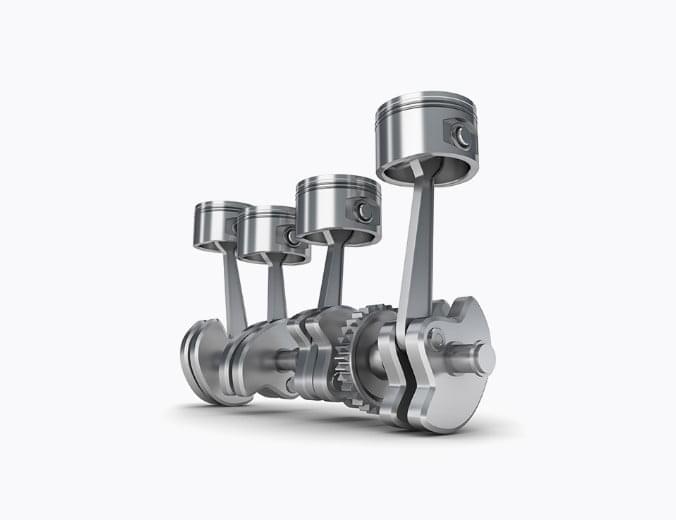
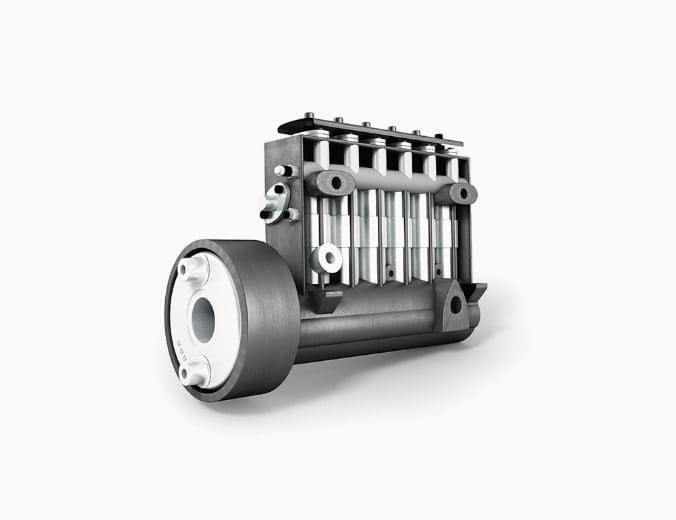
Internal combustion engines In automobile, motorcycle, ship, train, etc. Transmissions and axles.
Industrial machinery
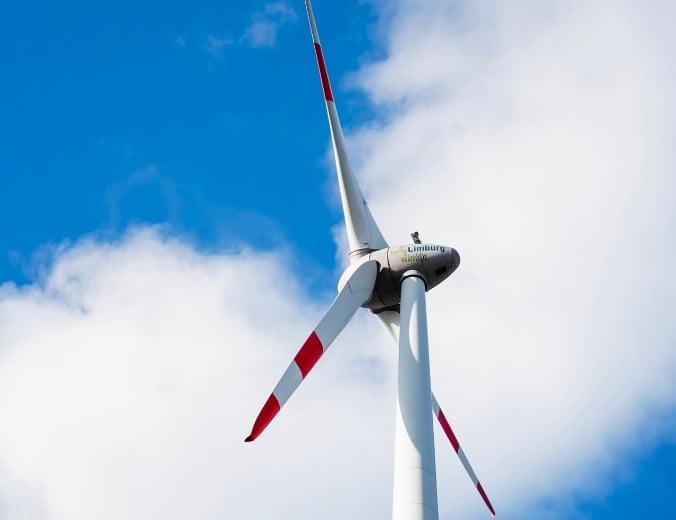
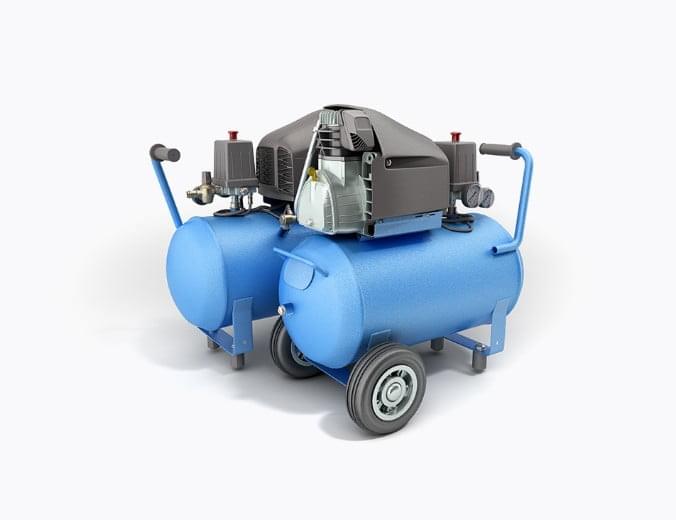
Hydraulic system, compressors, gears and turbines, etc.
Composition
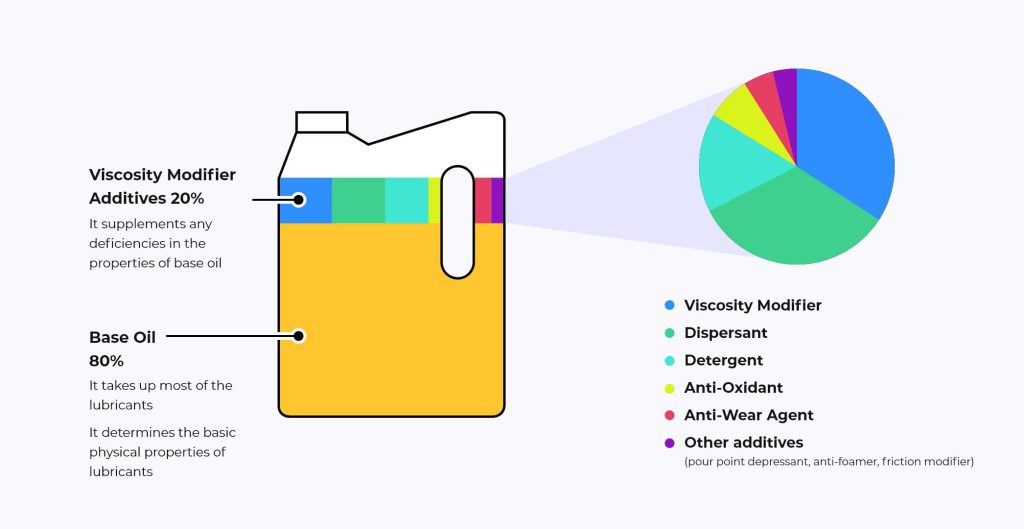
Lubricant is composed of base oil and additives, and the composition ratio varies depending on the type and viscosity of Lubricant.
Function
Reduce friction / wear Lubricants reduce wear and friction on surfaces of metals by forming an oil film.
Cooling Lubricants discharge the heat generated by friction and the lubrication system absorbs the heat.
Cleaning Lubricants prevent the entry of impurities such as metal fragments, dust of carbonized substances from incomplete combustion.
Anti-rust(chemical protection) Lubricants protect the lubrication surface from rusting due to corrosive gas, moisture, or oxygen in the air.
Enclosure Lubricants seal the contacting section of the machine by preventing the leakage of gas injected into the cylinder or the entry of water or dust into the cylinder.
Dispersion of forces Lubricants uniformly disperse forces locally applied to frictional surfaces.